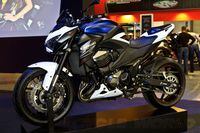
Where Is The Motorcycle Going?
Big motorcycle shows like EICMA always raise the big questions. It was easy to answer them at similar shows held right after WWII: People needed transportation, they needed it cheap and they needed it now, and motorcycles were the answer.
Today, it's harder. Before the present economic downturn, motorcycling had enjoyed its longest-ever boom years; but now, only the well-fixed folk can buy what was hot back in 2007. For the rest of us, any bike that costs more than a decent used economy car could easily be too much. Manufacturers have responded slowly, with lower-priced and more-utilitarian hardware such as Honda's NC700X.
But as we marched through the great halls of EICMA, we saw endless choices in every shape, color and intended use. In the old days, motorcycles came in good, better or best; today, the simple idea of two wheels, an engine and a place to sit has multiplied into commuter, tourer, sportbike, enduro, adventure, standard, cruiser. They are all competently designed from basic principles.
What this tells us is that motorcycles have come so far from their original basis as minimum transportation that they are now as various and as style-driven as clothing. How does this bike make me feel? Does this one make me look fat? Does this color go with my eyes? In more prosperous times, motorcycles evolved into free-choice additions to our rich, complex lives, alongside a hybrid car for socially responsible commuting and an Armageddon SUV with blacked-out windows for towing the boat. And then, the depression of 2008 hit.
So, there we were at the Milan show, surveying motorcycling’s still-dizzying richness of choice and hoping economic recovery soon brings it all back within reach of the many who could last afford it five years ago.

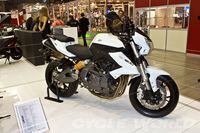
Highlights from EICMA 2012
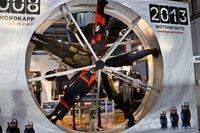
Highlights from EICMA 2012
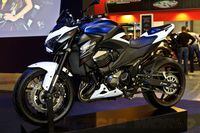
Highlights from EICMA 2012
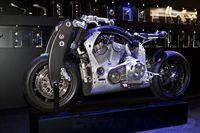
Highlights from EICMA 2012
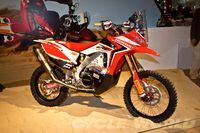
Highlights from EICMA 2012
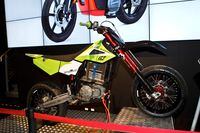
Highlights from EICMA 2012
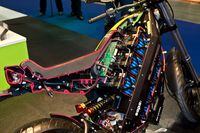
Highlights from EICMA 2012
Highlights from EICMA 2012
Highlights from EICMA 2012
Highlights from EICMA 2012
Highlights from EICMA 2012
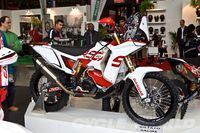
Highlights from EICMA 2012
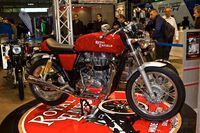
/cloudfront-us-east-1.images.arcpublishing.com/octane/KSNZSTKWCBFM5AMR6BTKPMKS4M.jpg)
/cloudfront-us-east-1.images.arcpublishing.com/octane/BTU27T45DZBJPFB3INGU2IF2K4.jpg)
/cloudfront-us-east-1.images.arcpublishing.com/octane/Q3NMWXNTORDRRPUQWN64NBF4GQ.jpg)
/cloudfront-us-east-1.images.arcpublishing.com/octane/CRVSLCOYJJAQJPXM3QR55QZ4MI.jpg)
/cloudfront-us-east-1.images.arcpublishing.com/octane/DMOWJKJ4MBFMNHHLJU5UDQ2XNE.jpg)
/cloudfront-us-east-1.images.arcpublishing.com/octane/5ZYZ5SBW3NGILFHX752GVIIUWI.jpg)
/cloudfront-us-east-1.images.arcpublishing.com/octane/L2I5DKCFKREAJNBEQ7XLXQNN4M.jpg)
/cloudfront-us-east-1.images.arcpublishing.com/octane/3OZB4KMMIRGWDGTDDB6EQIKRKY.jpg)
/cloudfront-us-east-1.images.arcpublishing.com/octane/OJW3I353JNF7XKFABVFTHLAV54.jpg)
/cloudfront-us-east-1.images.arcpublishing.com/octane/MOQXN6IMONCDRFELPP2ACHB6NA.jpg)
/cloudfront-us-east-1.images.arcpublishing.com/octane/BSP74CN5XBF43KFQ3H5GTPOPQI.jpg)
/cloudfront-us-east-1.images.arcpublishing.com/octane/4UPS7MCQTNA4ZBARLE3WTV3ELM.jpg)
/cloudfront-us-east-1.images.arcpublishing.com/octane/OTDAQF4HE5GHNIONQRLEK3Z3RE.jpg)
/cloudfront-us-east-1.images.arcpublishing.com/octane/YOEW4LDHFRDJFDHCZBG5KNP4J4.jpg)
/cloudfront-us-east-1.images.arcpublishing.com/octane/NI3XMPGZUNBZPEJDWSAGP4UFBA.jpg)
/cloudfront-us-east-1.images.arcpublishing.com/octane/4SJ3RQBZTNH3PCPQLGZOXK3TZQ.jpg)
/cloudfront-us-east-1.images.arcpublishing.com/octane/MEJHURDIJRCZDDJS4P7MYWU7PE.jpg)
/cloudfront-us-east-1.images.arcpublishing.com/octane/4QLNDR5OYFFULANQ52EMYZQHPQ.jpg)
/cloudfront-us-east-1.images.arcpublishing.com/octane/UUJZR5PY4JBFDID6WD7N5KWOUQ.jpg)
/cloudfront-us-east-1.images.arcpublishing.com/octane/3P36NSBXW5GO5IFGBG3IE6AQFA.jpg)
/cloudfront-us-east-1.images.arcpublishing.com/octane/XG7E3VVMQ5ACJFI7MH6BQZ7H6Q.jpg)
/cloudfront-us-east-1.images.arcpublishing.com/octane/626SUOJNEFDSPIS7GYHTYKHFJU.jpg)
/cloudfront-us-east-1.images.arcpublishing.com/octane/N7N5BNWR6ZEJLKA2OTWYEP5RF4.jpg)
/cloudfront-us-east-1.images.arcpublishing.com/octane/4BB2E5ZI3FGQLCQOQAFAXZBACM.jpg)